For the best preparation in school exams, Study Studio brings you the most trusted and proficient NCERT Solutions for Class 3 EVS Chapter 10 What is Cooking. Our subject experts have designed the solutions and the reference so accurately that children will get the well-structured solutions here. You can download these NCERT Solutions for Class 3 EVS in PDF format for your child and enjoy the solutions anytime in a holistic environment of your home.
Access NCERT Solutions for Class 3 Social Science Chapter 10 – What is Cooking
1. Look at the picture. Colour the spaces which have dots in them. What do you see?
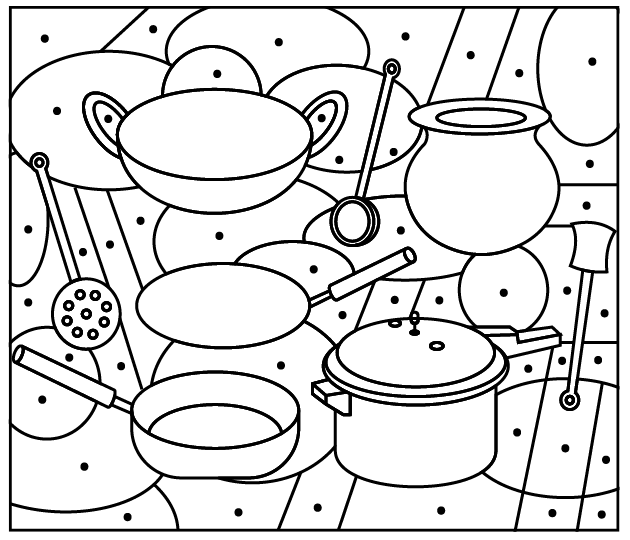
Ans: I can see the following utensils after colouring the spaces that have dots in them:
- Skimmer spoon
- Ladle
- Cooker
- Pot
- Tawa
- Spatula
- Cauldron
- Frying pan
2. In the picture, you must have found some utensils used for cooking. Are there any other utensils used in your house for cooking? Which are they?
Ans: Yes, various cooking apparatus such as a baking bowl, measuring cups, a hand grinder, and a grill are utilized for domestic purposes.
3. What are utensils made of?
Ans: Stainless steel, cast iron, glass, and other materials have been used for manufacturing utensils.
4. Ask some elderly people what kind of utensils were used earlier. What were they made of?
Ans: Back then, earthen pots, iron and brass utensils were primarily used for cooking purposes.
5. We do not cook all the things that we eat. Find out which things we eat raw and which ones we cook before eating. Which are the things we eat both cooked and raw? Fill in the table given below.
Ans:
| Things that are Eaten Raw | Things that are Eaten Cooked | Things that are Eaten Both Raw and Cooked |
| Cucumber | Meat | Cabbage |
| Radish | Fish | Broccoli |
| Carrot | Mushroom | Cottage cheese (Paneer) |
| Sugarcane | Vegetables like brinjal, potato, okra, etc | Carrot |
| Fruits | Rice | Tomato |
| Beetroot | Pancake | Onion |
6. Go to the kitchen and observe something being cooked. What all was done to cook it? Write the sequence. Don’t forget to write the name of the item being cooked. Look at the notebook of your classmates and discuss in a group. Name of the item.
Ans: Pulao is the name of the dish. Following are the steps to prepare this recipe:
- Soak one cup of rice in two cups of water for one hour.
- Prepare vegetables such as carrots, onions, green chilies, peas, and tomatoes by rinsing and cutting them.
- Finely chop herbs like coriander and mint.
- In a pressure cooker, heat the ghee and add the bay leaf, star anise, cardamom, cumin seeds, cinnamon, ginger garlic paste, and chopped vegetables and shallow fry for a while.
- Pour in the soaked rice and water.
- Put the lid on the cooker and cook on medium heat.
- Turn off the gas after 2 whistles.
- Remove the lid cover once the pressure has been released.
- Serve hot with any vegetable gravy.
7. Given below are different methods of cooking. Write the names of two things cooked by each of these methods. Add some more methods of cooking to the list and give examples too.
Ans:
| Method of Cooking | Names of Things |
| Boiling | Rice, Dal, Eggs, Vegetables |
| Baking | Bread, Cake, Bunns, Muffins |
| Roasting | Fish and Meat chops |
| Frying | Chicken 65, Potato chips, Onions rings |
| Grilling | Vegetables, Chicken, Paneer |
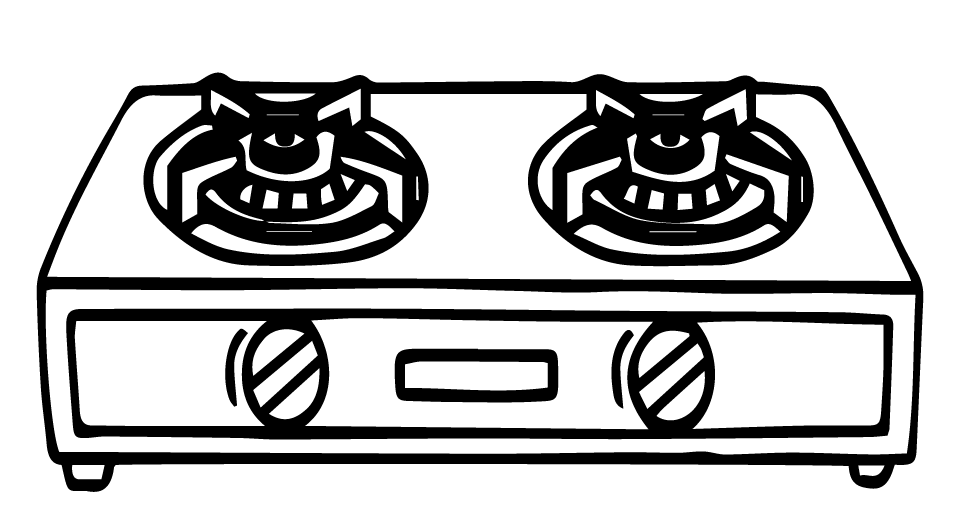
8. What is used to cook food in your house? Draw a picture in the notebook and write its name.
Ans: In my residence, meals are prepared on a gas burner.
9. Identify the pictures given below and write their names. What produces heat in each of them? Match the picture with the list. Matching can be done with more than one thing also.
Ans:
(image will be uploaded soon)
10. Soak whole moong seeds overnight in water. In the morning, wrap the soaked moong in a wet cloth and cover it. Take it out after a day. Do you find any difference?
Ans: Yes, after one day, I saw that the moong seeds had changed. They began to sprout.
11. Which are the other things you can prepare without cooking? Write their names and the method of preparing them. One example is given below.
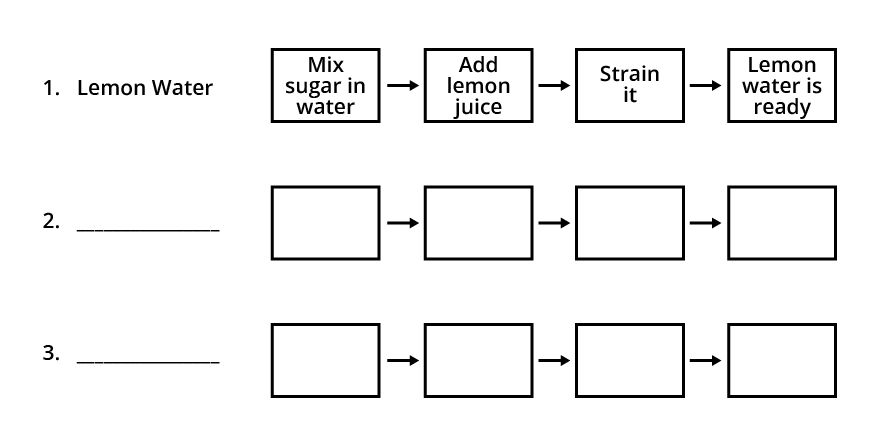
Ans: Sprouts chaat:
Take mixed sprouts—–> Add finely chopped onions, tomatoes, mashed potatoes, and coriander—–> Sprinkle salt, turmeric, black pepper powder, and chaat masala—–> Mix well and serve.
Lassi:
Take a bowl of creamy curd/yogurt —–> Add Sugar and a pinch of salt for taste—–> Add mango puree or vanilla essence (optional)—–> Pour cold water—–> Churn properly for 2-3 mins—–> Transfer that into a tumbler——> Garnish with finely chopped almonds and pistachios.
NCERT Solutions Chapter 10 – What is Cooking
NCERT Solutions Class 3 EVS Chapter 10 talks about different kinds of food we eat. The lesson also talks about the utensils that we use for cooking. Children will learn what can be eaten raw or what needs to be cooked or food that can be eaten both raw and cooked. The lesson also teaches the kinds of burner we can use for cooking. It is an interesting topic for students. They will have the scope to explore things in the kitchen of their own home and discuss with their parents to get more information. This will increase the curiosity in gathering information and will encourage them to actively participate in all activities in the class.
Let us explore what utensils we need for cooking food. We have seen our mother use a variety of utensils for cooking such as frying pans, pressure-cookers, saucepans, kadhai, pot skimmer, Tawa, spatulas, strainers, etc. Different utensils are used for cooking different kinds of food. For example, frying pans are used for frying food, kadhai is used for cooking vegetables, pressure cookers are used for boiling dal, rice, etc. Tawas can be used for making chapatis or parathas. Saucepans can be used for making tea, coffee or boiling milk. We used different kinds of spatulas to do the cooking. You can explore all these utensils in your kitchen and can make a list of it.
Some food can be eaten raw like fruits, tomatoes, carrots, radish, cucumber, etc. Some food needs to be cooked. They cannot be eaten raw such as pulses, legumes, chicken and most of the vegetables. Some food can be eaten both raw and cooked such as onion, tomatoes, cabbage, etc. You can make a list of vegetables and fruits that can be eaten raw or cooked.
There are different methods of cooking food. The different methods of cooking are roasting, boiling, frying, baking and steaming. Let us see some examples: chicken can be roasted, we boil milk, we fry eggs and sauté vegetables by using the techniques of frying. We bake cakes and we can also steam vegetables, which is considered to be very healthy.
What are the different kinds of burners we use for cooking? Mostly, we have seen our mother using a gas stove for cooking. Gas stoves run on LPG cylinders but there are other burners available to cook. In villages, people use cow dung cakes to cook. They cook on burners made out of clay and they put cow dung cakes or wood or coal in these kinds of burners. Some people use stoves to cook where kerosene oil is used. Electric heaters are also used for cooking. Do you know cooking can be done in sunlight also?
Conclusion
Study Studio’s NCERT Solutions for Class 3 EVS Chapter 10, titled “What Is Cooking,” offer young learners a captivating journey into the world of culinary arts. These solutions have been meticulously crafted to align seamlessly with the NCERT curriculum, providing clear and practical insights into the art of cooking. Study Studio’s unwavering commitment to delivering high-quality education is evident in these solutions, as they adeptly simplify complex cooking concepts in a manner tailored for children. By utilizing these resources, young students not only acquire the skills to prepare simple dishes but also gain a deeper understanding of food preparation techniques and the significance of nutrition. This chapter nurtures essential life skills while fostering an appreciation for the joy of cooking.