NCERT Solutions Class 4 EVS Chapter 16 A Busy Month teaches us about different kinds of birds and their distinctive features. The lesson deals with the kinds of nests birds make and how they keep themselves safe from their enemies. The lesson also teaches us about various kinds of animals that have different kinds of teeth. The Study Studio team has done extensive research and developed the most authentic and appropriate NCERT Solutions for the easy understanding of students.
The Class 4 EVS NCERT Solutions cover solved exercises for all 24 chapters. There are enough practice questions available on Study Studio. You can download the PDF files of NCERT Solutions any time from Study Studio and practice the solutions as many times you want to.
Access NCERT Solutions For Science Class 4 Chapter 16 – A busy Month
1. How many years ago did Gijubhai write this letter?
Ans: This letter was written by Gijubhai around 85 years ago.
2. Find out how old your grandfather and grandmother were at that time.
Ans: My grandmother was one year old at the time, and my grandfather was two.
3. This letter talks about many different birds. How many of these birds have you seen?
Ans: I saw a dove, an Indian Robin, a crow, and a koel.
4. How many other birds have you seen? Which ones?
Ans: I’ve noticed two additional birds: a sparrow and a parrot.
5. Have you seen a bird’s nest? Where did you see it?
Ans: Yes, I’ve noticed a sparrow’s nest on a nearby tree.
6. Which is your favourite bird? Can you show your friends in the class how it flies, and what sound it makes?
Ans: The peacock is my favourite bird. It can’t fly very far.
7. Guess what this bird is –
‘A crown on the head and coins on the tail,
So many shades of blue from top to tail.’
Clue: It is our national bird.
Ans: This bird is a peacock. Peacock is our national bird.
8. Do you know of any other bird that makes its nest in a tree trunk like the barbet does?
Ans: The owl, like the barbet, builds its nest in a tree trunk.
9. If there is a nest inside or around your house, look carefully at it. Remember, do not go too near the nest, and do not touch it. If you do, then the bird will not come to the nest again. Observe the nest for some days and note down the following things:
a. Where is the nest made?
Ans: The nest is built in a tree.
b. What is the nest made of?
Ans: Grass, twigs, and dry leaves make up the nest.
c. Is the nest ready or are the birds still making it?
Ans: It’s still being made by the bird.
d. Can you recognize which bird has made the nest?
Ans: Yes, I’m aware that a sparrow has built a nest.
e. What things does the bird bring to the nest?
Ans: The bird returns to the nest with food and extra twigs.
f. Is there any bird sitting in the nest?
Ans: The nest is occupied by a sparrow.
g. Do you think there are any eggs in the nest?
Ans: No, the nest does not contain any eggs.
h. Can you hear any sound like ‘chee chee’ from the nest?
Ans: Yes, the sound of ‘chee chee’ may be heard from the nest.
i. If there are chicks in the nest, what do the parent birds bring for them to eat?
Ans: There aren’t any chicks in the nest.
j. How many times in one hour do the birds come to the nest?
Ans: The bird visits at least three to four times every hour.
k. After how many days did the chicks leave the nest?
Ans: If there were chicks in the nest, they would have left in three months.
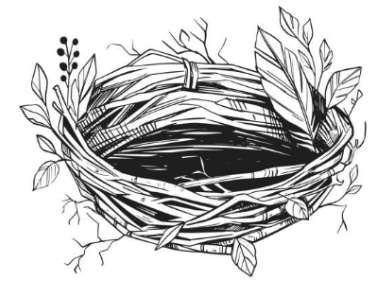
l. Make a picture of the nest in your notebook
Ans:
10. Find out about Your Own Teeth and Write.
a. Your age:
Ans: I’m 8 years old.
b. How many teeth do you have?
Ans: I have 20 teeth
c. Have any of your teeth fallen or broken? How many?
Ans: Yes, my two front teeth have fallen out.
d. How many new teeth do you have?
Ans: I’ve got three new teeth.
e. How many of your milk teeth have fallen, but no new teeth have come in their place?
Ans: My two milk teeth have fallen out, but no new teeth have appeared to take their place.
11. Look at your friend’s teeth. Are there different kinds of teeth? Draw one front tooth and one back tooth in your notebook. Can you see any difference between these teeth?
Ans: Yes, he has different kinds of teeth.
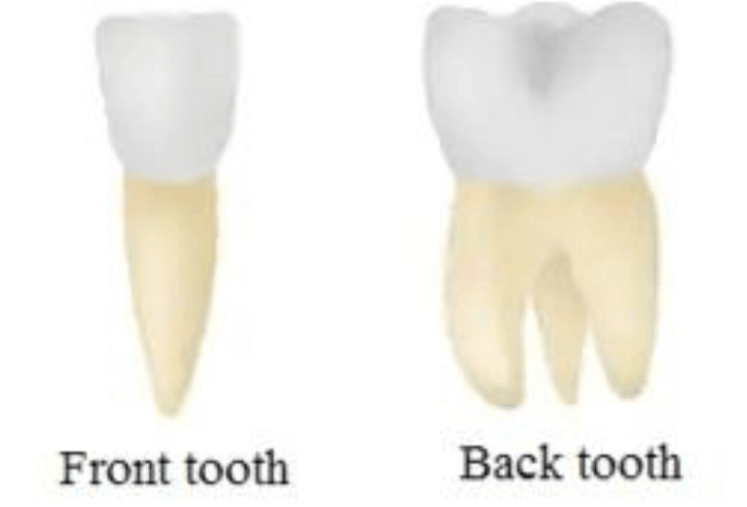
There is a difference between the front tooth and back tooth. Front tooth is slightly more pointed than the back tooth.
12. You do not have any teeth in your mouth. What kind of things would you be able to eat?
Ans: If I didn’t have any teeth then I wouldn’t be able to eat hard things like biscuits or chocolates. Probably, I should eat only soft things like cake, halva, porridge or drink juices and milk.
13. Find out from different people who do not have teeth – what are the kinds of things that they cannot eat?
Ans: My grandmother’s teeth have fallen. So, she cannot eat papads or rotis. She can eat only mashed rice with sambar or drink milk, coffee, or tea.
NCERT Solutions for Class 4 EVS Chapter 16 A Busy Month
We all know the general features of birds. They have wings, feathers that keep them warm, their bones are light and hollow that makes their bodies light. This is the reason why they are able to fly. They have two legs with claws that help them to climb trees and hold on to the branches. Some water birds have webbed feet that help them to swim. They have beaks and they use their beaks for eating food, catching their prey, and making nests to lay eggs.
How Do Birds Make Their Nests?
It is actually very interesting to know that they make their nests as cozy as your bed. They make their nest with materials such as wool, soft twigs, cotton wool, roots, grass, hair, etc. The birds keep looking for these small things and keep collecting them to make a nest.
Birds make their nest in very safe places. They can actually figure out which place is safe for them. They protect themselves from their enemies like humans, snakes, crows, cats, rats, and squirrels.
Crows make their nests very high on the trees. They make their nests with any kind of materials like wire, wood, etc. Birds like dove make their cozy nests in thorny hedges or between the cactus plants to keep them safe from animals. They make their nests with soft twigs, cotton wool, hair-thin roots, etc.
Sparrows and pigeons make their nests around our houses.
Koel is a kind of bird that looks like a crow except that it has a beautiful voice. Koels are too lazy to make their own nests so they lay eggs in the crows’ nests and the crows hatch them along with their own eggs.
Barbet birds or coppersmith birds make their nests in the holes of trees.
Tailorbirds make their nests by stitching two leaves of a small tree and then they lay eggs in the fold of the leaves.
Sunbirds make their nests like a hanging basket from the branch of the tree. Their nests are made up of grass, thin twigs, dry leaves, bits of tree bark, and pieces of cloth rags.
Birds normally make their nests to lay their eggs in them. Then they hatch the eggs, raise the chicks and when the chicks learn to fly, they leave the nest. They make nests only to lay eggs.
What Kind of Feet Do Birds Have?
Different birds have different kinds of feet. Some birds like ducks have webbed feet that help them to swim in the water. Some birds like eagles, hawks have clawed feet to catch their prey. They are also called talons. Birds like woodpeckers have three claws in front and one claw at the back so that they can climb the trees and hold onto the branches. Birds like ostrich have long feet so that they can walk and run.
What Kind of Beaks Do Birds Have?
Different kinds of birds have different kinds of beaks. Eagles have hooked beaks to tear the flesh. Some birds have curved beaks to peck on the woods. Some birds have short beaks to crush seeds. Crows have sharp beaks to cut any kind of food. Some birds have long beaks to find their food from the mud and shallow water.
Conclusion
From this lesson, we have learned many unique features of birds and how they are protective of their little ones just like the way our mothers are protective of us. By learning this lesson, children will be encouraged to explore more about birds in their surroundings.